
15 Gentle Braided protective hairstyles for sleep & Bedtime
Finding the right Braided protective hairstyles for sleep can make your nighttime hair routine easier while helping reduce tangling, friction, and unnecessary manipulation. Whether you have natural curls, textured hair, locs, or protective extensions, the right bedtime style should feel comfortable rather than tight or heavy. From loose two-strand twists to satin-wrapped box braids, these gentle styles are designed to help you protect your hair while sleeping without sacrificing comfort or style.
Why Choose Protective Braids for Sleeping?
Nighttime can be surprisingly tough on your hair. Tossing and turning against cotton bedding may create friction, leading to frizz, tangles, dryness, and breakage. A gentle braid or twist keeps the hair more controlled and reduces the amount of movement during the night.
The key is to avoid styles that are excessively tight at the scalp or require strong elastics. Pairing your hairstyle with a satin scarf for braids, silk bonnet, or satin pillowcase can provide an additional layer of protection.
These protective hairstyles for bedtime are especially useful for people who want low-maintenance nighttime routines. The goal is not to create a complicated hairstyle but to keep your strands organized, comfortable, and protected until morning.
1. Loose Two-Strand Twists with Satin Scrunchie
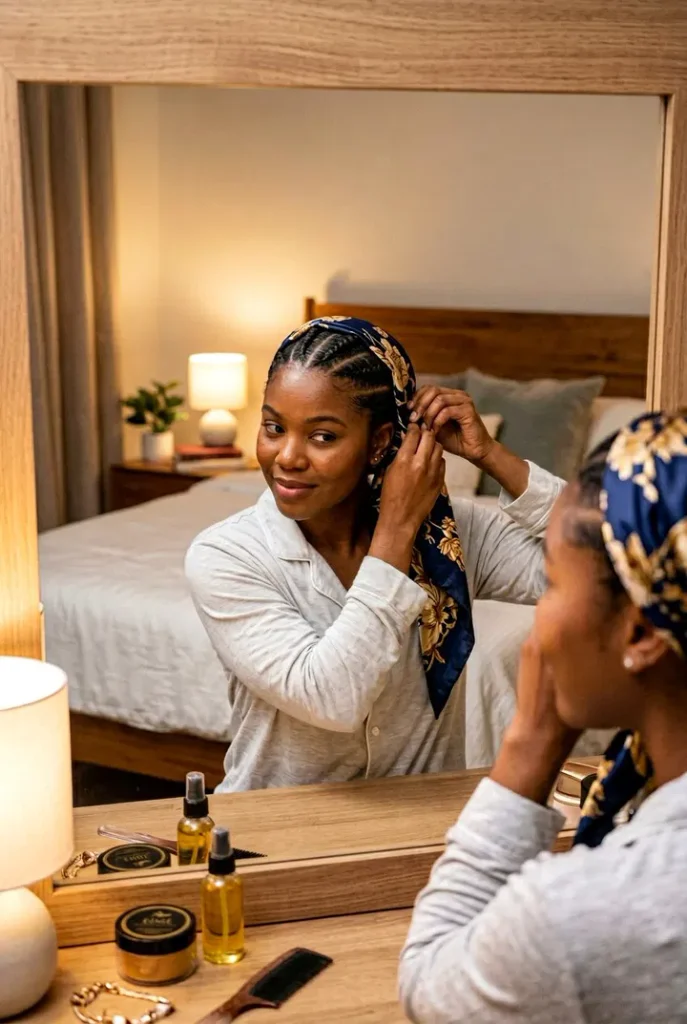
Loose two-strand twists are one of the easiest options for nighttime hair protection. Divide your hair into several comfortable sections and twist each section loosely from the roots toward the ends.
Once finished, gather the twists gently at the back or nape of your neck with a satin scrunchie. Avoid pulling them tightly.
These two-strand twists for sleep work particularly well for natural curls because they help prevent excessive tangling while maintaining the hair’s natural shape. They can also create soft waves when unraveled the following morning.
2. Pineapple Braid Updo with Silk Bonnet
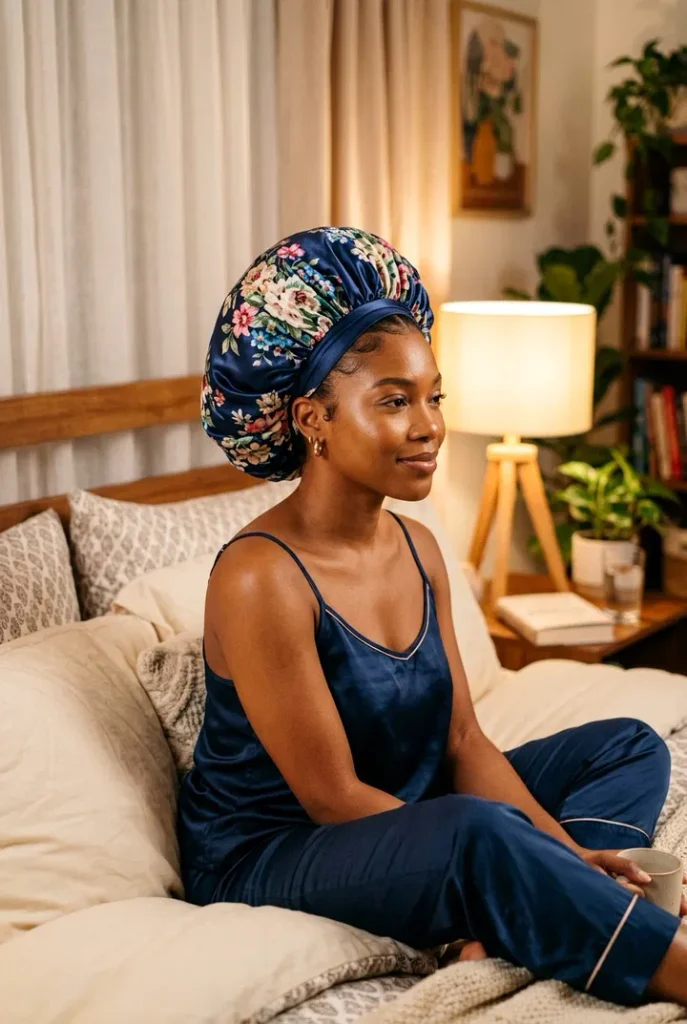
A pineapple-style updo can be adapted into a gentle braided version for curly and textured hair. Gather the hair loosely toward the top of your head and create one or two soft braids.
Instead of using a tight elastic, secure the ends with a soft satin scrunchie. Cover the finished style with a silk bonnet for natural hair.
This method keeps the hair elevated away from your pillow and can help preserve curls overnight. It is particularly useful for people who want an easy morning routine.
3. Flat Twist Cornrows for Bedtime
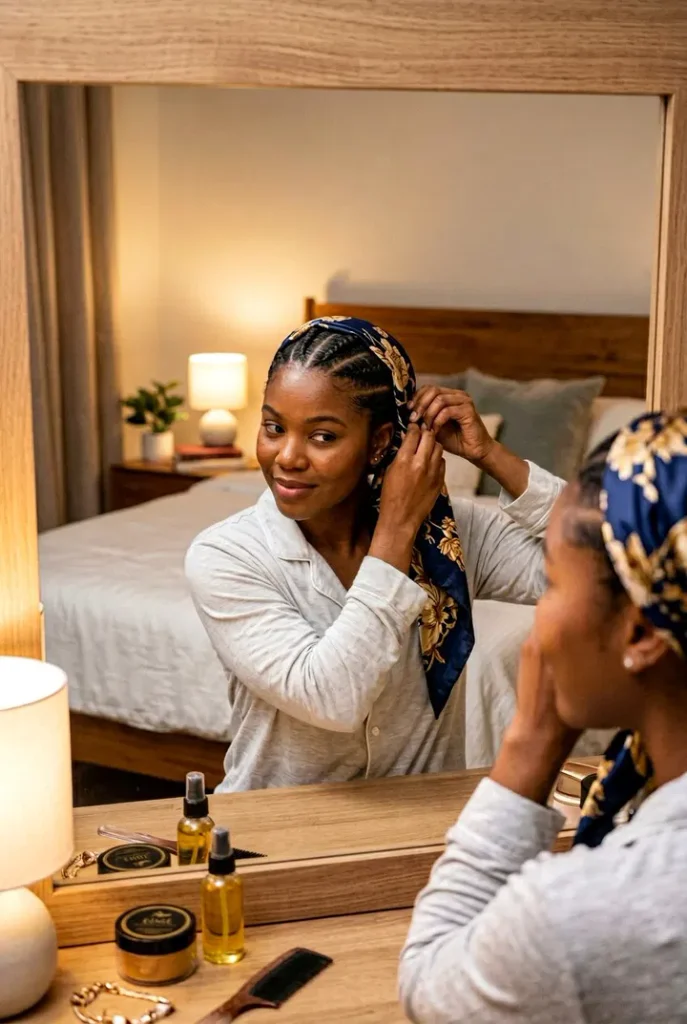
Flat twists are a practical alternative to traditional cornrows when you want your hair to remain close to the scalp without creating excessive tension.
Create several flat twists from the front toward the back, keeping each section comfortable and relatively loose. The style can be worn beneath a satin bonnet or scarf.
These cornrows for bedtime and flat-twist variations can help organize natural hair while minimizing nighttime manipulation. They are also a good foundation for soft texture the next morning.
4. Chunky Box Braids Piled into a High Bun
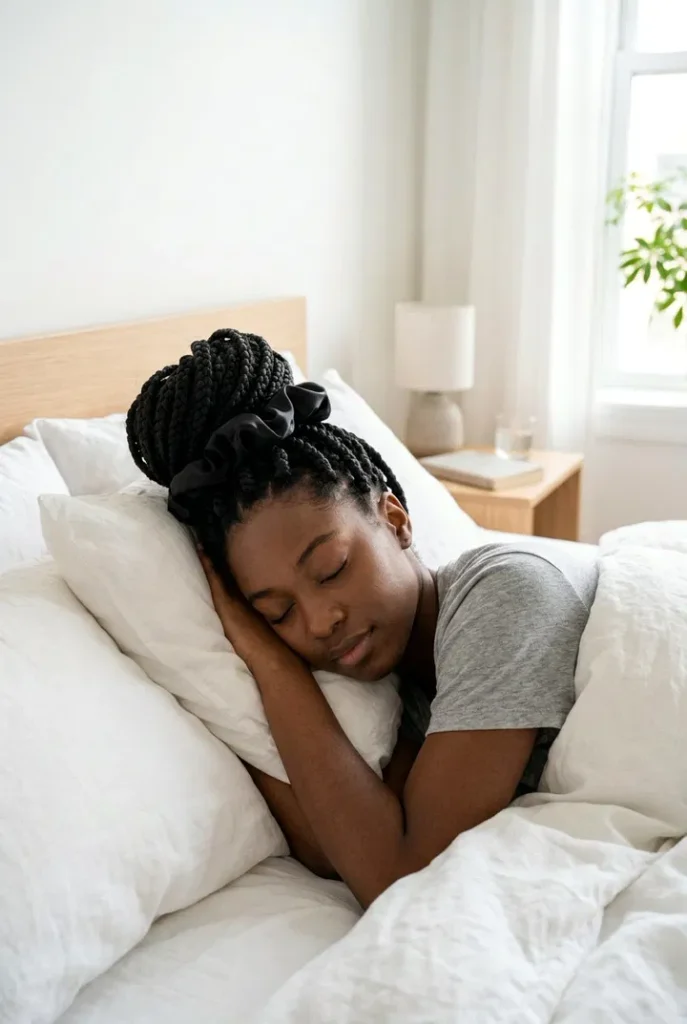
If you already have box braids, you do not necessarily need to leave them loose while sleeping. Gather the braids carefully into a high, loose bun.
Use a satin scrunchie instead of a small elastic to prevent unnecessary pressure. The bun should be loose enough that you do not feel pulling around your hairline.
This approach is particularly useful for box braids for sleeping, especially when longer braids tend to move across your face or become tangled during the night.
5. Mini Braids Divided into Two Low Pigtails
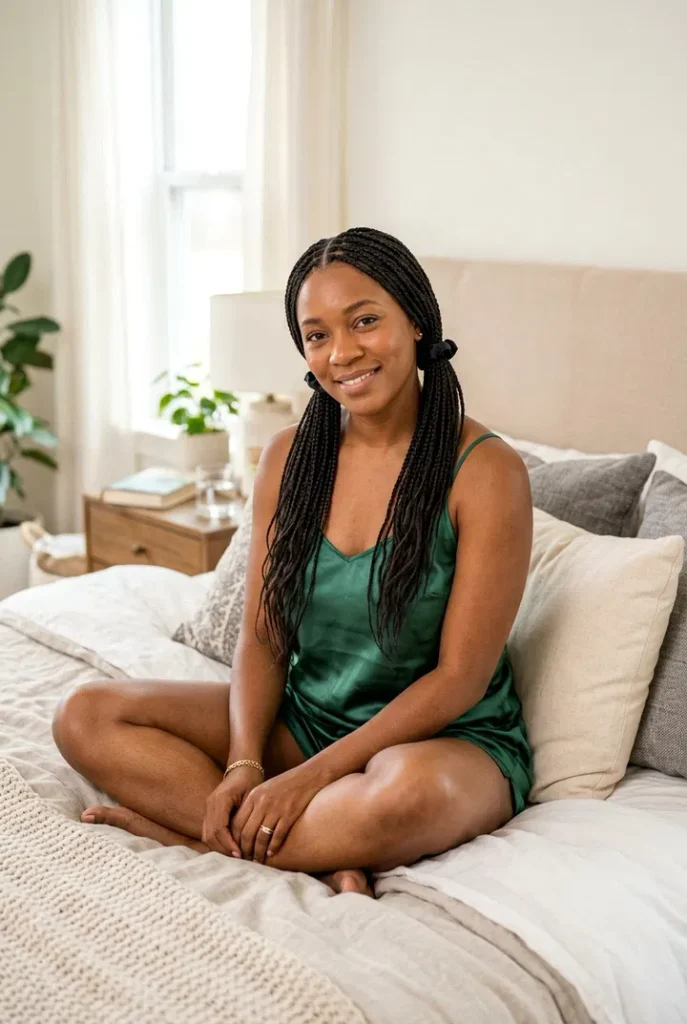
Mini braids can be divided into two low sections and secured into relaxed pigtails. Keep the pigtails close to the nape rather than pulling them tightly.
This style distributes the weight of the hair instead of concentrating it in one location. It is also a simple option for people looking for easy braided protective styles for sleeping.
For additional protection, wear a satin bonnet or sleep on a satin pillowcase.
More Amazing Ideas


6. Bantu Knot-Out Prep Braids for Sleep

If you are preparing for a knot-out, small braids can provide an excellent overnight foundation. Divide damp or lightly moisturized hair into sections and braid each one loosely.
The next morning, carefully unravel the braids and separate the resulting texture with your fingers.
These Bantu knot-out prep braids can help create definition while keeping your hair organized overnight. Avoid making the sections too tight, particularly around the edges.
More Amazing Ideas
7. Knotless Box Braids Loosely Wrapped in Satin Scarf
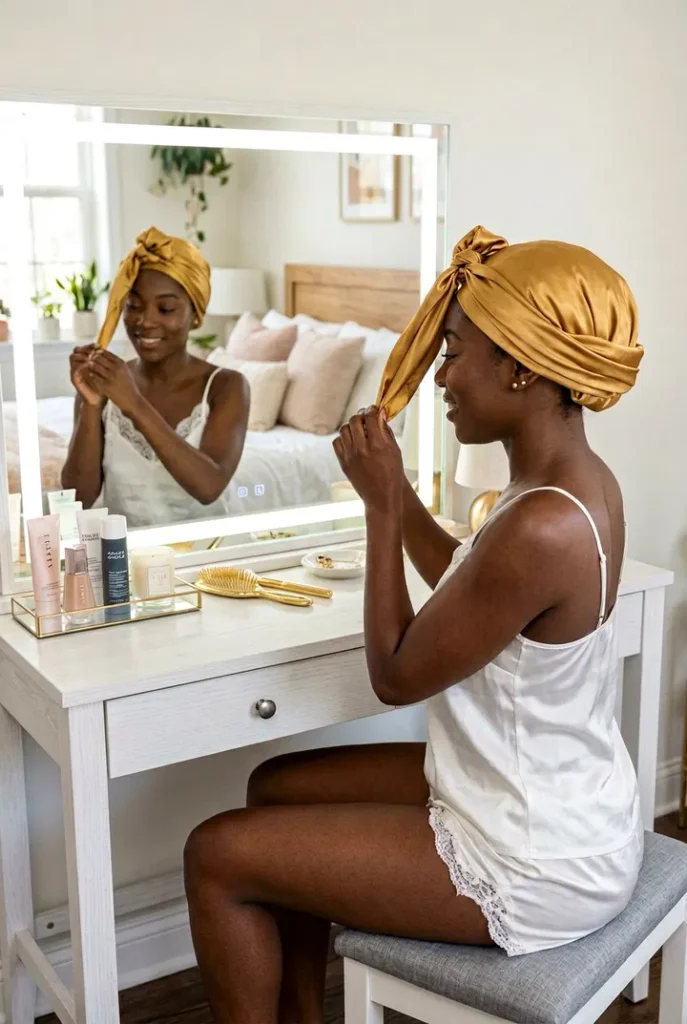
Knotless braids can be gathered gently at the back of the head and wrapped with a satin scarf. This prevents the braids from rubbing directly against rough bedding.
Rather than tying the scarf tightly, create a comfortable wrap that stays secure without placing pressure on your hairline.
Among different protective braids to wear while sleeping, knotless braids are convenient because the hair is already sectioned and protected. Satin wrapping simply adds another layer of nighttime protection.
8. Jumbo Senegalese Twists Pinned in Loose Updo

Jumbo Senegalese twists can become heavy when left completely loose during sleep. A relaxed updo can help keep them contained.
Gather the twists loosely and pin them into a low or high updo using large, smooth hair pins. Avoid creating a tight bun because excessive tension can make the style uncomfortable.
These Senegalese twists for sleep work particularly well when paired with a satin scarf or bonnet that keeps the twists together throughout the night.
9. Cornrow Braids with Satin Wrap Technique
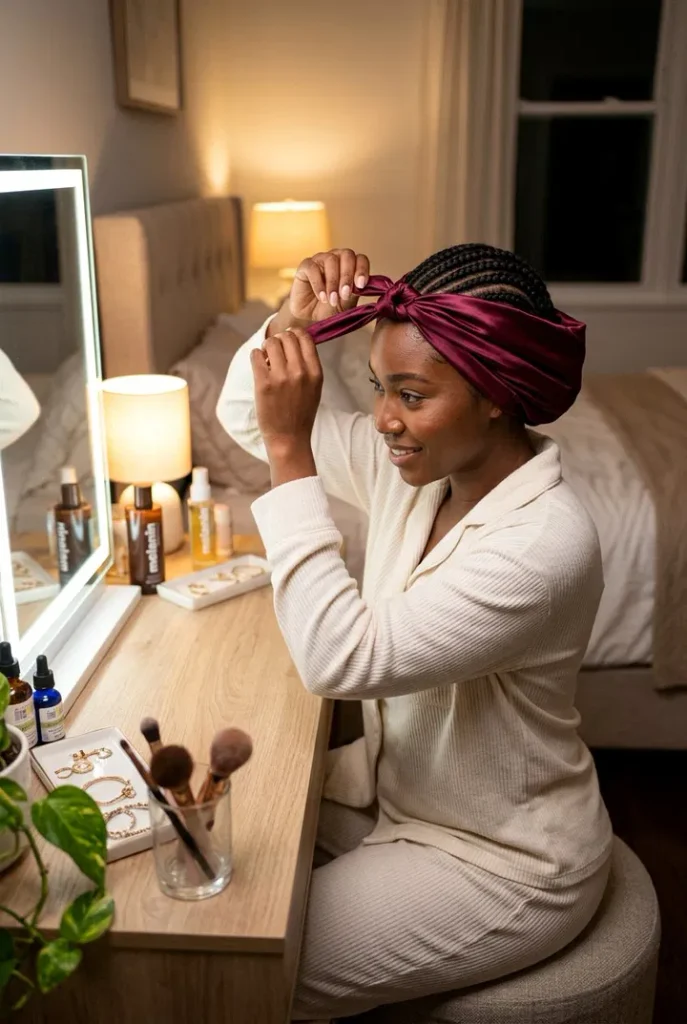
Traditional cornrows can be an excellent nighttime style when they are installed comfortably. If your hair is already braided, a satin wrap can help protect the braids from friction.
Fold a satin scarf around the head, making sure it covers the hair completely without pressing too tightly against the scalp.
This combination is useful for people who prefer braided hairstyles for sleep that require very little morning maintenance. Simply remove the scarf and gently arrange the braids when you wake up.
10. Loose Single Braids Gathered with Scrunchie at Nape

For a very simple option, divide your hair into several loose single braids and gather them gently at the nape.
A satin scrunchie can hold the braids together without creating the same level of tension associated with tight elastics. Keep the braid ends relaxed rather than wrapping them repeatedly around the scrunchie.
This is one of the most practical overnight protective hairstyles for people who want a quick routine before bed.
11. Halo Braid Pinned Around Head for Sleep
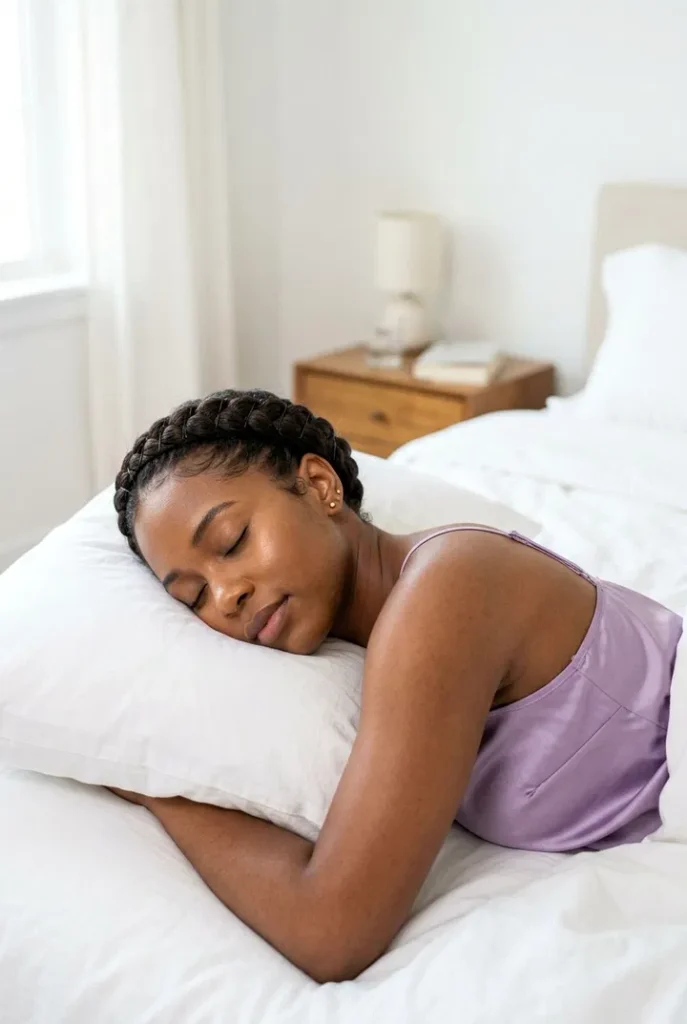
A halo braid can distribute the hair around the head rather than leaving it loose over the pillow. Create a relaxed braid and gently position it around the crown.
Use a few smooth pins to hold it in place. Make sure the pins are positioned comfortably and do not press into your scalp while you sleep.
This style offers a beautiful option for people who want sleep-friendly braided hairstyles that also create gentle waves when released in the morning.
12. Feed-In Braids Wrapped in Silk Bonnet
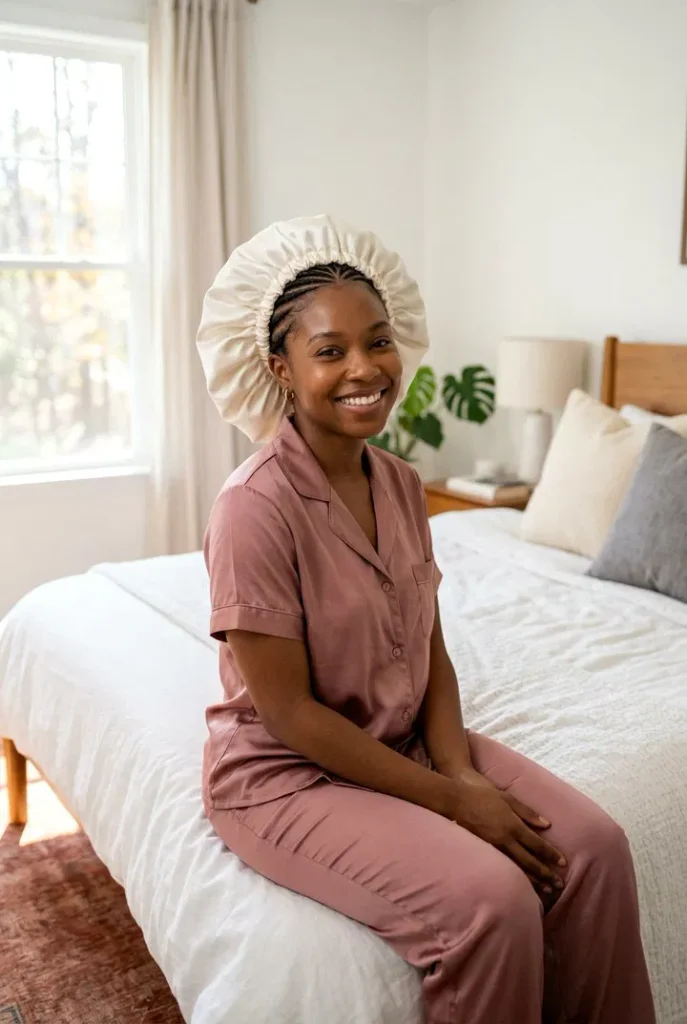
Feed-in braids can be protected overnight with a silk bonnet. If the braids are already installed, simply gather longer sections loosely before placing the bonnet over your hair.
A bonnet helps reduce friction between the braids and bedding while keeping flyaways under control.
For anyone wearing feed-in braids for sleeping, the most important consideration is comfort. Avoid tying additional accessories too tightly around the base of the braids.
13. French Braid Low Ponytail for Natural Hair
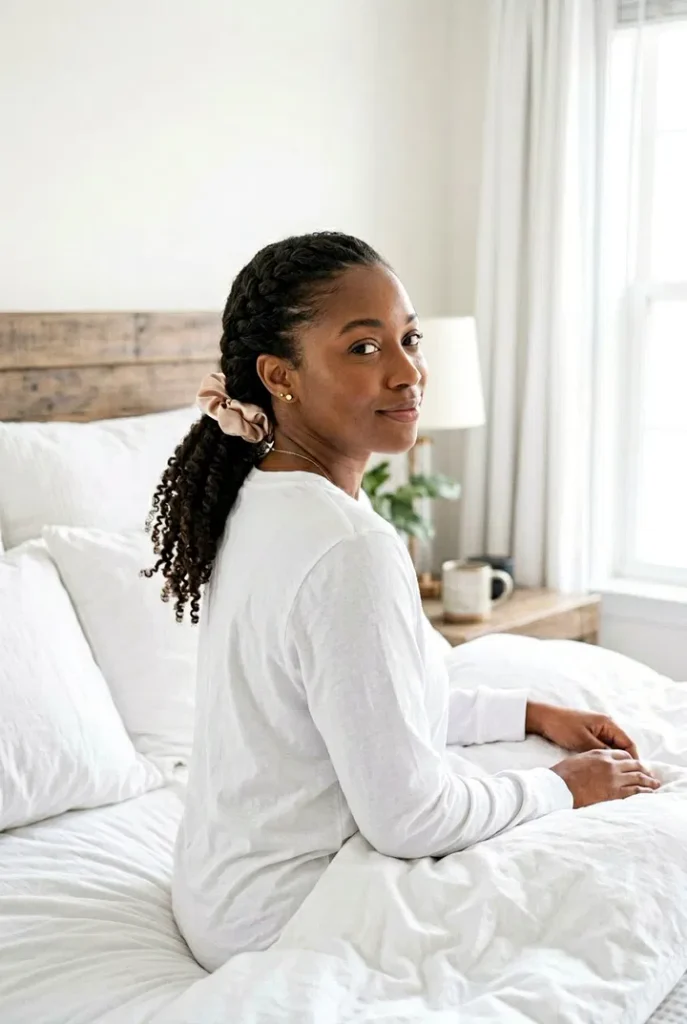
A loose French braid ending in a low ponytail is a classic choice for bedtime. Start the braid gently and avoid pulling the hair tightly against the scalp.
Secure the end with a soft satin scrunchie. This style works especially well for medium-to-long hair that tends to become tangled overnight.
It is also an easy way to incorporate braids that protect hair while sleeping into a simple nighttime routine without requiring extensions or complicated styling.
More Amazing Ideas
14. Ghana Braids Tucked into Protective Bun
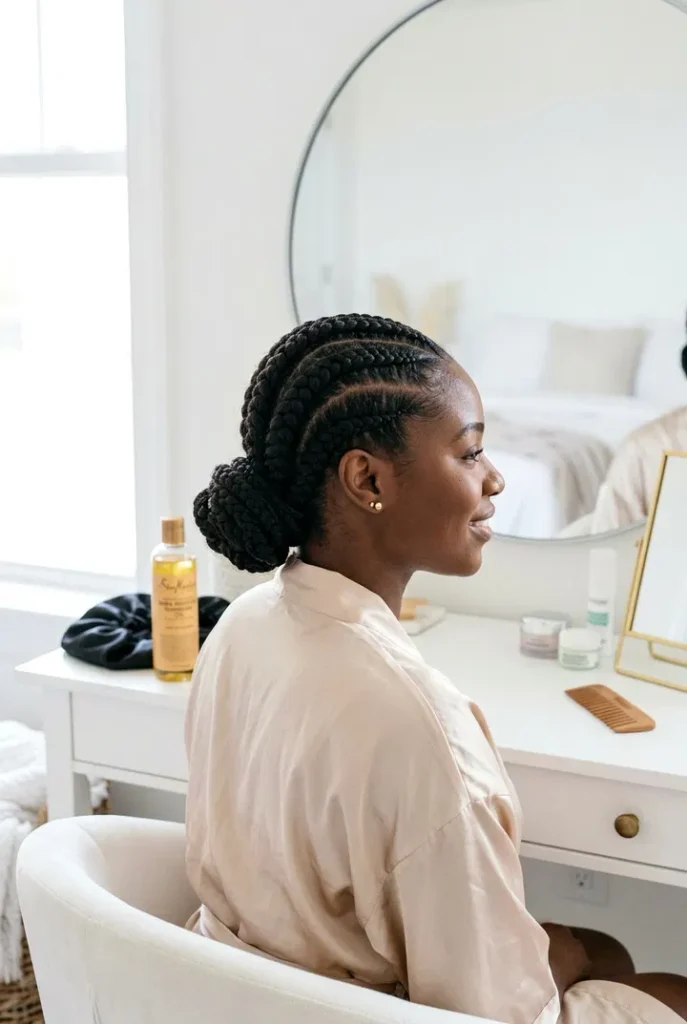
Ghana braids can be gathered into a loose protective bun when you want to keep the style contained overnight. Carefully collect the braids and tuck them together without creating excessive tension.
A satin bonnet or scarf can then be placed over the finished bun.
This Ghana braids protective style is especially convenient for longer braids because it prevents them from moving freely across the pillow while you sleep.
15. Four-Section Twist Out Prep Braids for Sleep
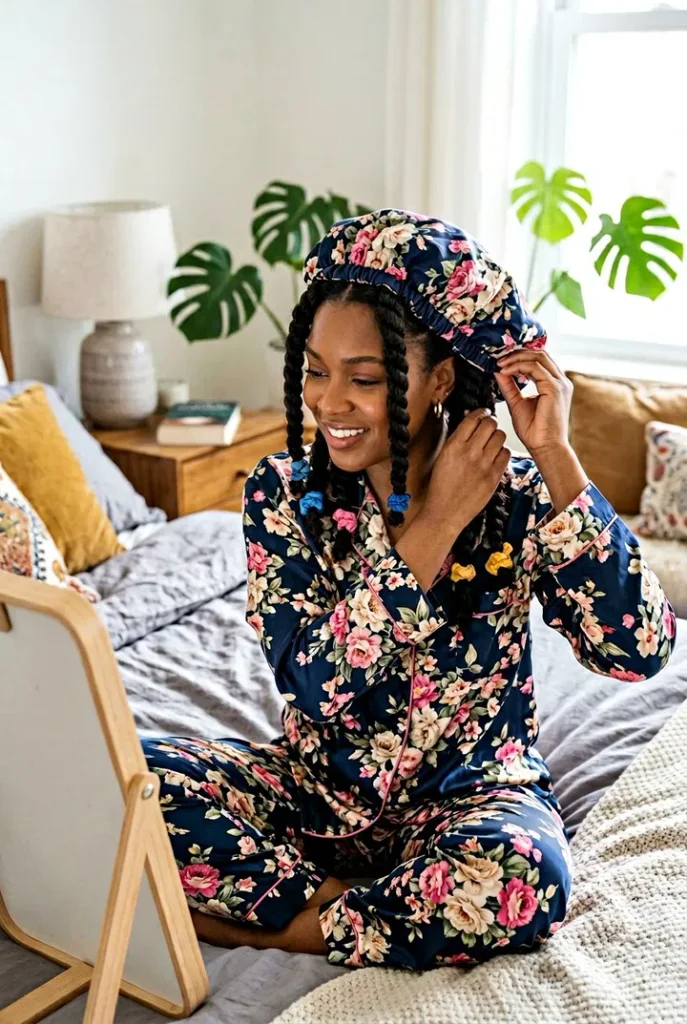
Divide your natural hair into four larger sections and create loose twists or braids in each section. This simple technique keeps the hair organized and prepares it for a soft, defined style the following morning.
Apply a lightweight moisturizer if needed before creating the sections, but avoid saturating the hair immediately before bed.
These natural hair protective styles for sleep are easy to customize depending on how much definition you want the next day. Smaller sections generally create more texture, while larger sections produce a softer result.
How to Make Your Bedtime Braids More Comfortable
The best protective styles for sleeping should never cause pain, pulling, headaches, or noticeable scalp tension. If a braid or twist feels uncomfortable, loosen it or choose a different style.
Consider these simple nighttime habits:
- Use satin or silk instead of rough cotton whenever possible.
- Choose satin scrunchies instead of tight elastic bands.
- Keep braids loose around the hairline.
- Avoid sleeping with wet hair unless the style and your hair type can safely accommodate it.
- Use lightweight moisturizing products when your hair needs additional hydration.
- Protect extensions and long braids with a satin scarf or bonnet.
- Avoid excessively tight buns and ponytails.
- Give your scalp regular breaks from styles that create tension.
A satin pillowcase can also be useful on nights when you do not want to wear a bonnet or scarf. It provides a smoother surface that may reduce friction as you move during sleep.
How to Choose the Best Braids for Sleeping
The best braids for sleeping depend on your hair length, texture, density, existing hairstyle, and personal comfort. Someone with short natural hair may prefer flat twists or small two-strand twists, while someone with long extensions may find a loose bun or satin-wrapped style easier.
The most important factor is gentle tension. Protective styling should reduce manipulation rather than introduce additional stress to the scalp and hairline.
If you frequently experience tangling, a few larger sections may be more convenient than many small braids. If your goal is morning curl definition, smaller braids or twists may be more suitable.
Final Thoughts
Choosing Braided protective hairstyles for sleep does not have to mean creating a complicated hairstyle every night. Simple options such as loose two-strand twists, low braids, flat twists, or satin-wrapped extensions can help keep your hair organized and reduce nighttime friction.
The best routine is the one that feels comfortable, fits your hair type, and is easy enough to maintain consistently. Pair your favorite style with a satin scrunchie, silk bonnet, satin scarf, or satin pillowcase for an extra layer of hair protection.
Whether you prefer natural curls, knotless braids, Senegalese twists, Ghana braids, or butterfly locs, there are plenty of Braided protective hairstyles for sleep that can make your nighttime routine easier while helping you wake up with more manageable hair.


