17 Easy Work Hairstyles for Winter That Stay Polished All Day
Winter mornings ask a lot of a work hairstyle. A heavy coat collar, a wrapped scarf, a wool hat, and dry indoor air can undo a careful style before you even reach your desk. The best Easy Work Hairstyles for Winter are the ones that survive all of that: they keep the nape clear, they sit above the highest collar you own, and they can be refreshed in two minutes after a commute instead of needing a full restyle. This guide gathers seventeen such styles, from smooth low ponytails to soft buns, braids, bobs, and natural-texture puffs, so you can pick the ones that suit your hair type, your length, and your morning routine.
Before we get into the styles, one idea is worth holding on to: choose the shape around your winter clothing, not the other way around. Try the style on with your actual coat and scarf, check where the collar lands, and notice which pieces slip free during the day. A style that works with your layers will look intentional at five in the afternoon, not just at eight in the morning. If you love romantic updos generally, you may also enjoy these wedding braid hairstyles for softer, special-occasion inspiration, but the seventeen looks below are built for ordinary workdays, cold commutes, and long hours indoors.
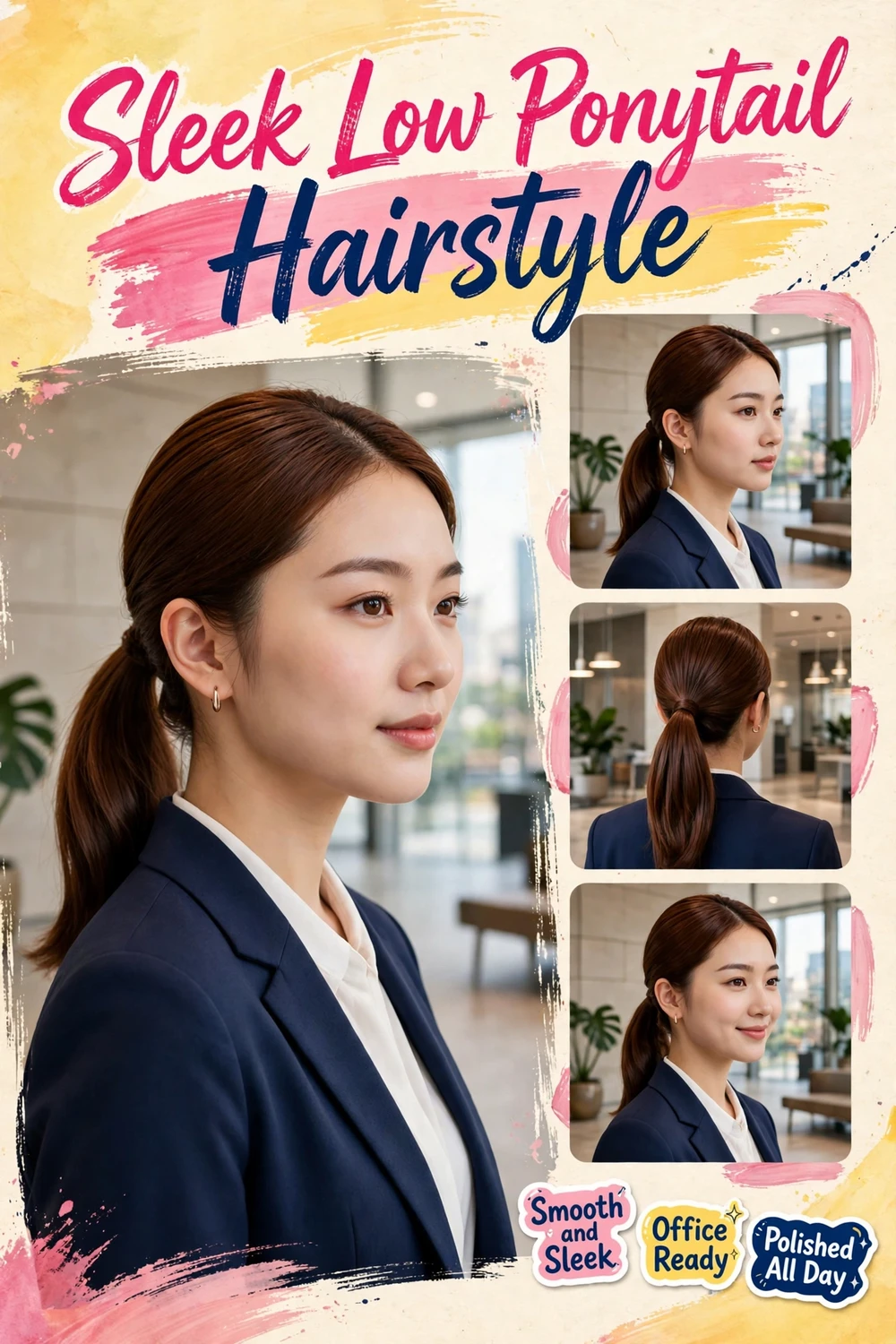
Sleek Low Ponytail Hairstyle
A sleek low ponytail is the quiet workhorse of winter office hair. The hair is brushed smooth, parted in the center or to one side, and gathered just above the nape rather than sitting directly on it. That small lift matters: it keeps the elastic clear of coat collars and stops a scarf from pushing the whole style upward during the day. The tail itself can fall straight or carry a soft bend through the ends, and the crown stays relatively flat, which gives the whole silhouette a calm, controlled shape that pairs easily with blazers, knitwear, and structured winter layers.
Medium and long hair are the easiest lengths for this style, and it flatters most textures once the surface is smoothed. Start with a paddle brush to guide the hair back, secure the base with a fabric-covered elastic, and smooth a pea-sized amount of styling cream or serum over the surface to calm flyaways without coating the lengths. If your hair is fine, keep most of the length inside the ponytail and release only one restrained front section, which preserves fullness. If your hair is thick, a slightly broader base spreads the weight more comfortably and stops the style from feeling pulled.
Winter practicality is where this ponytail earns its place. When a scarf repeatedly nudges the elastic upward, move the base a little higher instead of tightening it again and again, which only creates tension without solving the problem. A dry-hair refresh is quick: smooth the surface where static or friction has disturbed it, reset the part with your fingers, and leave the rest alone. At the salon, it helps to explain where your front layers should finish when your hair is tied back, so they stay intentional instead of constantly slipping into your face.
For a slightly dressier version, wrap a thin strand of hair around the elastic and pin it underneath, which hides the band and makes the whole style look more finished. A deep side part gives the same ponytail a different character, sweeping the front softly across the forehead, while a center part keeps it strict and minimal. This is also a useful gym-to-office style: braid the tail for the workout, then release it into a smooth low ponytail afterward. Keep the elastic color close to your hair color so the anchor disappears.
Tip: Put your coat and scarf on before you fix the final ponytail height, so the base sits just above the collar all day.
Soft Low Bun Hairstyle
A soft low bun gives you a clear neckline without the height of a crown bun, and it is one of the most forgiving Easy Work Hairstyles for Winter when mornings are rushed. Gather the hair a little above the nape, keep a gentle lift through the crown, and fold or wrap the lengths into a compact shape. A center or side part keeps the front polished, while one or two longer pieces near the jaw soften the frame without dropping into a bulky scarf. The result looks deliberate but never stiff, which suits offices that are professional without being formal.
This bun works beautifully on medium and long hair, and natural wave or curl only adds to its softness. Secure the base with a fabric-covered elastic first, then fold the lengths and pin the sections in place with bobby pins, finishing with a light mist of flexible hairspray only where flyaways need control. On second-day hair it can be a five-minute style. A smoother, more formal version after washing takes longer, since it needs drying and preparation, but the everyday version is meant to be quick and a little imperfect around the edges.
The main winter consideration is collar clearance. If the bun rests directly on a high coat collar, the fabric will push it upward all through the commute, so raise or flatten the anchor rather than adding more pins. For a salon cut, it is worth deciding how long you want any face-framing pieces to remain when the rest is up, since keeping them above heavy scarves reduces friction while preserving a softer frame around the face.
Small accessories can change this bun without changing the technique. A single tortoiseshell pin or a slim gold barrette adds polish for presentations, while leaving the bun plain keeps it right for everyday wear. If you wear glasses, the low placement keeps the temples clear, and the soft front pieces balance frames nicely. For very fine hair, a little dry shampoo at the roots before gathering gives the crown grip and lift that lasts until evening.
Tip: Build the bun once while wearing your coat, note where the collar reaches, and set the anchor just above that point.

Claw Clip French Twist Hairstyle
A claw clip French twist brings office polish to a morning routine that takes barely a minute. Gather the hair low, twist it upward against the back of the head, and secure the roll vertically with a sturdy clip. Shorter ends can fold inside for a clean finish or fan slightly over the top for a softer one, while the front stays smooth and the crown stays relaxed so the shape never feels overly formal. It is the kind of style that looks like effort even when it took almost none.
Medium and long hair suit this twist best, though the clip size should match your hair’s density rather than its length alone. Straight or slippery hair may need a little texturizing spray through the interior sections for grip, while textured hair often holds the twist with less preparation. A prepared-hair twist can genuinely take a minute or two, though wash-day drying remains a separate, longer task. Choose a clip with enough capacity to close comfortably, since forcing a thick roll into an undersized clip guarantees it will slip by lunchtime.
For winter, position the bottom of the clip above the highest collar you regularly wear. If a coat presses against the hardware, the twist can loosen even when the clip itself is strong, so raise the twist slightly for the cold months. This is a temporary style, so no special haircut is needed, but if you have face-framing layers, tell your stylist whether you usually leave them loose or include them in the twist, so their length supports your everyday routine.
The clip you choose matters as much as the technique. Matte clips grip better than shiny ones on smooth hair, and a wider jaw holds thick hair more securely than a narrow one. If your twist slips by midday, the fix is usually a smaller, tighter roll rather than a bigger clip. For fine hair, backcomb the interior section very lightly before twisting to give the clip something to hold. Keep a spare clip in your desk drawer for days when the morning one goes missing.
Tip: Catch a small amount of hair beneath the twist when you close the clip, so the whole shape cannot slide as you move.

Half-Up Tucked Waves Hairstyle
A half-up style with tucked waves keeps the temple area neat while leaving enough loose length for a softer office finish. Gather the hair from just behind the temples, secure it at the back, and tuck the side sections cleanly behind the ears, keeping broad waves through the lower half rather than adding volume beside the face. The loose ends can fall behind the shoulders or forward over a coat once you arrive at work, which makes this a flexible choice for days when you want your hair down but still controlled.
Shoulder-length and longer hair support this shape best, especially straight or wavy textures. Apply heat protectant before creating broad bends with a curling iron, then secure the upper section with a fabric-covered elastic. A quick refresh can focus on the front and a few flattened waves, while a complete set after washing takes more time, particularly on dense hair. If your hair is lower in density, gather a smaller half-up section so more length remains loose, and keep the waves broad to preserve visual fullness through the lower perimeter.
Winter clothing can roughen the underside of loose waves, so choose one clear placement for the lengths instead of repeatedly moving them across a scarf. The half-up section itself needs only a stable anchor. At the salon, explain where you want the shortest face-framing layer to finish when tucked behind the ear, since a section ending at the wrong point can spring free repeatedly and make the polished upper shape harder to maintain through the day.
A small barrette or a flat clip over the half-up section adds a finished detail without much effort, and it helps the style survive a hat, since the hat sits above the anchor rather than crushing it. For second-day hair, a little dry shampoo at the roots before gathering refreshes the crown and keeps the waves from looking flat. If your waves drop by afternoon, re-curling just the two front sections is usually enough to restore the whole shape.
Tip: Tuck the sides before refining the lower waves, so you can see which sections will actually stay visible.

Braided Low Ponytail Hairstyle
A braided low ponytail keeps long hair controlled from the morning commute through the end of the workday. Gather the hair slightly above the nape, secure the base, and create a medium-width braid down the length. A center or side part keeps the front clean, while the braid contains the ends so they are less likely to tangle against wool coats, scarves, or textured knitwear. It reads as neat and intentional, yet it is sturdy enough for windy walks and crowded trains.
Medium to long hair works best, and dense hair naturally creates a thicker braid. Use a lightweight styling cream to control flyaways, a fabric-covered elastic for the ponytail base, and a second small elastic at the braid end. Rebraiding dry, prepared hair can be a quick morning task, while full wash-day detangling and drying takes much longer, especially for long or dense hair. If your hair is very thick, use a slightly broader, less compact braid, which distributes the length more comfortably while still keeping the ends contained around scarves and outerwear.
Refresh the style by rebuilding the braid if it loosens rather than tightening the base throughout the day. If your scarf reaches high at the back, raise the ponytail anchor just enough to clear it. This is a temporary style, so a haircut is unnecessary, but for permanent face-framing layers it helps to tell your stylist whether you want those sections inside the braid or loose at work, since their finished length changes how tidy the front remains.
Once the basic version feels easy, try a fishtail braid for a more textured finish, or gently pull the braid edges outward, a technique called pancaking, to make a fine braid look fuller. Elastics that match your hair color keep the focus on the braid itself, while a single small ribbon at the base can dress it up for a team lunch or an after-work event. The style also travels well: it survives a long commute, a rainy walk, and a full day at a desk.
Tip: Secure the ponytail base before you start braiding, so the braid cannot pull unevenly at the nape when you put on or remove a coat.

Polished High Bun Hairstyle
A high bun removes the hair completely from scarves, turtlenecks, and coat collars, which can make winter mornings noticeably easier. Place the bun around the crown rather than directly at the hairline, keep the sides smooth and the front center-parted or brushed back, and aim for a compact rounded shape that looks controlled in an office setting. A little softness at the crown stops the finish from feeling severe, and the clear neckline means there is nothing for winter layers to catch, rub, or push out of place. Among Easy Work Hairstyles for Winter, this is the one to reach for on the coldest, windiest days.
Medium and long hair are easiest to gather, and dense hair may need the bun divided into two wrapped sections so its weight spreads more evenly. Use a paddle brush for a smoother surface, a fabric-covered elastic for the base, and bobby pins to secure the wrapped length. A bun on dry, prepared hair can be quick, while creating a sleek base after a full wash takes longer depending on texture and density. If your hair is very dense, a broader bun rather than one tall coil reduces concentrated weight while still keeping the neckline completely clear.
A high bun can also work under loose hoods, although tight hats will usually disturb it. If you expect to wear a fitted hat, choose another style for that day rather than repeatedly rebuilding the bun. At the salon, discuss any front layers you want to remain loose when your hair is up, since keeping those pieces above scarf level can make the winter version much easier to maintain through a full workday.
If a wrapped bun feels too severe, pull a few soft pieces loose around the face after pinning, which keeps the polish while softening the outline. A sock bun or a foam donut gives a perfectly round shape for formal days, while a hand-wrapped bun looks more relaxed. Statement earrings pair beautifully with a high bun because the neckline and ears are fully visible. Just remember that a tight hat will flatten the crown, so save this style for days when you can skip the beanie.
Tip: Secure the ponytail base before shaping the bun, then check that your coat and scarf come off without catching it.

Shoulder-Length Blunt Bob Hairstyle
A shoulder-length blunt bob offers a polished winter option without requiring any daily pinning. Keep the perimeter strong, with minimal visible layering and a center or soft side part. The ends can sit straight or carry a slight bend, while the front remains long enough to tuck behind the ears when a scarf adds bulk around the neck. The strong bottom line helps the cut keep its structure even when outerwear changes how the ends fall, which is exactly what you want from a cut in the cold months.
Straight and softly wavy textures show the shape most clearly. Lower-density hair may benefit from the fuller perimeter, while dense hair can have internal bulk assessed without thinning the entire edge. Apply heat protectant before using a round brush to guide the ends, then smooth a lightweight serum through the lower lengths to reduce surface fuzz. A front-and-end refresh may be brief, while a full blow-dry takes longer. If your hair is dense, preserve the visible blunt edge but ask whether internal bulk can be adjusted, which keeps the outline strong without creating unnecessary width.
Winter collars can push shoulder-level hair outward, so decide whether you prefer that slight flip or want the cut to sit clearly above the collar. At the salon, identify the exact dry perimeter you want, since even a small length difference changes how often the ends rub against scarves and coat collars during the workweek. A controlled flip at the ends can look intentional and may be easier to maintain than fighting the collar every hour.
The same cut can feel different depending on how you finish it: tucked behind the ears for a sharp office look, or worn loose with a slight bend for a softer day. Air-drying with a smoothing cream gives a relaxed finish, while a round-brush blow-dry makes the blunt line look razor sharp. The cut also grows out gracefully, since the strong perimeter keeps its shape for weeks. If you color your hair, a blunt edge shows off shine and even color particularly well.
Tip: Try your usual scarf with the bob before correcting every outward bend, since a slight flip often looks deliberate.

More Amazing Ideas


Side-Parted Sleek Lob Hairstyle
A side-parted lob creates a clean office line while giving the front enough movement to avoid looking rigid. Keep the main length between the jaw and the shoulders, retain a substantial bottom edge, and sweep the heavier side away from the face. The lighter side can tuck behind the ear, which reduces hair around scarf edges and leaves the upper silhouette more open. It is a confident, grown-up cut that still feels soft, and it works with blazers and knitwear alike. For anyone weighing shorter cuts against longer ones, this is a comfortable middle ground and a genuinely useful entry among Easy Work Hairstyles for Winter.
Straight and wavy hair reach this finish easily, while curlier starting textures need more styling if a sleek result is the goal. Apply heat protectant before using a flat iron, then use a lightweight serum through the ends to control friction-related flyaways. A morning refresh can focus on resetting the part and smoothing the visible surface, while a complete sleek finish after washing is a longer task, particularly on dense or textured hair. If your hair has lower density, keep the front layers longer and preserve more perimeter weight, so the side sweep still adds movement without reducing fullness through the bottom.
If winter hats flatten the roots, re-establish the part with your fingers instead of reheating the whole style. The lob needs reshaping when the perimeter loses its clean line or the front pieces stop falling as intended. At the salon, show the part you actually wear and identify the shortest front layer, since planning around a center part can create unexpected balance once the hair is consistently shifted to one side.
A deeper side part instantly makes the lob feel more dramatic for evenings, while a softer, shallower part keeps it right for the office. Flipping the ends slightly outward gives a retro touch, and flipping them under looks more conservative. The length also works well with a padded headband on days when you want your hair completely off your face. Because the cut sits above the shoulders, it dries faster than long hair, which saves precious minutes on cold mornings.
Tip: Set the side part while the roots are slightly damp, then let it dry in place, so it is easier to restore after a commute.

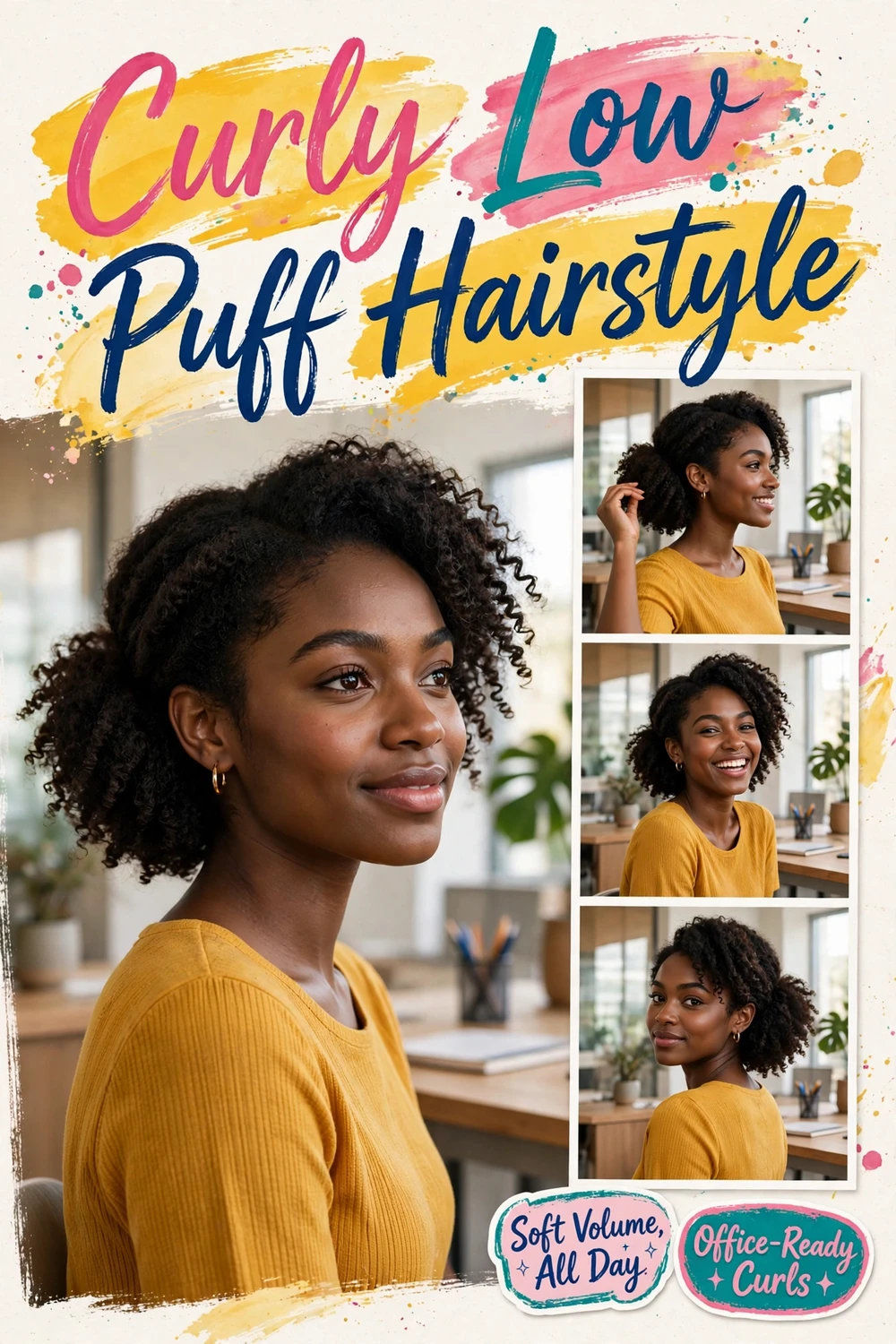
Curly Low Puff Hairstyle
A curly low puff keeps natural texture visible while containing enough volume for an office setting. Gather the hair above the nape into a soft puff, leaving the curls rounded rather than pulling them into a tight bun. The front can remain gently side-parted, center-parted, or brushed away from the face, and keeping the anchor above the coat collar prevents the puff from being pushed upward during the commute. It is a style that celebrates curl pattern instead of fighting it, which makes it both practical and beautiful for winter workdays.
Curly hair with enough length to gather works naturally for this style. Use a lightweight leave-in conditioner for softness, curl gel to support visible definition, and a fabric-covered elastic for the base. Refreshing several front curls and rebuilding the puff can be relatively quick, while a full wash, detangle, define, and dry routine takes significantly longer depending on curl pattern and density. If your curls are shorter, create a smaller puff slightly higher on the back of the head, so the neckline can stay clear without forcing every section toward the crown.
Winter indoor heating may leave some curls feeling drier or less defined, so refresh only the sections that need it rather than coating the entire puff repeatedly. If the base slips, reposition it instead of tightening aggressively. For salon planning, discuss the finished dry length of any front curls you want loose, since shrinkage should guide where they sit around the face rather than relying on one stretched measurement. If you like textured, layered shapes in general, these shaggy bob haircuts show how movement and soft layers can frame the face in a similarly effortless way.
A thin headband or a silk scarf tied at the hairline can dress up the puff for a presentation without changing the technique. At night, a loose pineapple on top of the head, covered with a satin scarf, protects the curl pattern so the morning refresh is shorter. A little edge control smoothed along the hairline gives a finished look, but keep the product light so the front curls still move naturally. The style also pairs well with bold earrings, since the neck and ears stay visible.
Tip: Set aside any front curls before gathering the puff, so choosing them afterward cannot disturb the anchor.
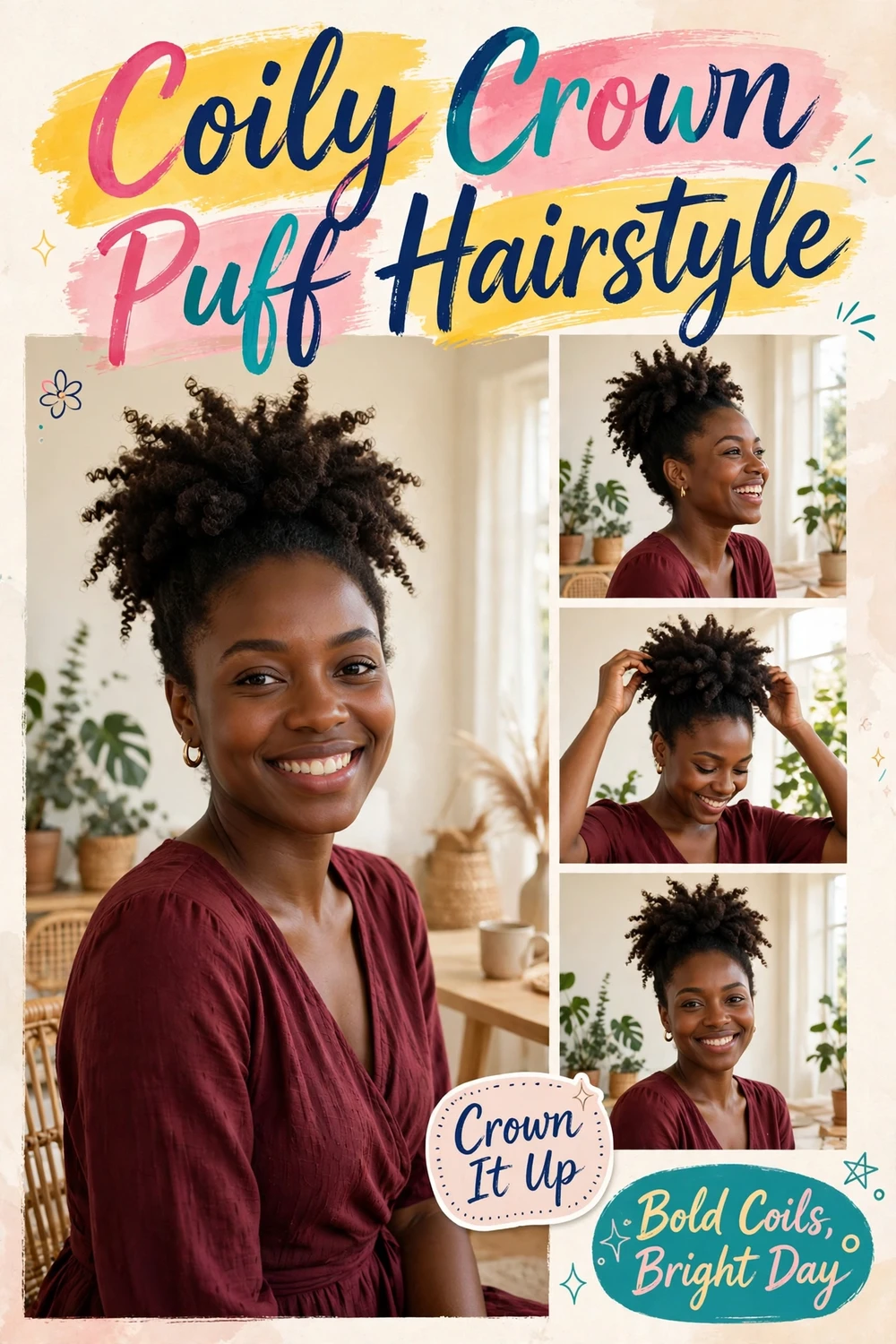
Coily Crown Puff Hairstyle
A coily crown puff lifts natural volume above heavy winter collars while keeping the texture fully visible. Gather the hair toward the crown, allowing the coils to spread into a rounded shape rather than compressing them into a smooth bun. The sides can stay softly controlled, while several front coils may remain defined near the forehead if they do not interfere with your routine. The high placement is the whole point: nothing sits against a scarf or coat collar, so the style stays exactly where you put it all day. It is a striking, joyful shape and one of the most practical Easy Work Hairstyles for Winter for coily hair.
Coily hair with enough length to gather adapts well to this placement. Use a lightweight leave-in conditioner for softness, curl cream for visible coil grouping, and a fabric-covered elastic to secure the base comfortably. A morning refresh can involve repositioning the anchor and reviving several coils, while full wash-day detangling, definition, and drying is a much longer process that should be treated separately from daily styling. If your coils are shorter, position the puff slightly lower and allow more width, so the hair can still clear a scarf while preserving a full natural silhouette.
The high placement keeps the hair away from scarves and coat collars, but a fitted winter hat will usually flatten the puff, so on hat days a lower protective arrangement may be more practical. For professional shaping, discuss where you want the crown volume to sit and how much edge tension feels comfortable, since the updo itself is temporary and there is no need to cut layers specifically to create it.
Puff size is easy to adjust: gather less hair for a smaller, subtler shape on quiet office days, or gather more for a fuller crown when you want a bolder look. A satin-lined cap or a silk scarf at night protects the coils and shortens the morning routine. Regular deep conditioning keeps the puff soft rather than dry, which matters in heated offices. If you want a weekend variation, two smaller puffs use the same technique and the same products.
Tip: Secure the base comfortably before shaping the puff, and create height by lifting and arranging the visible coils rather than repeatedly tightening the elastic.
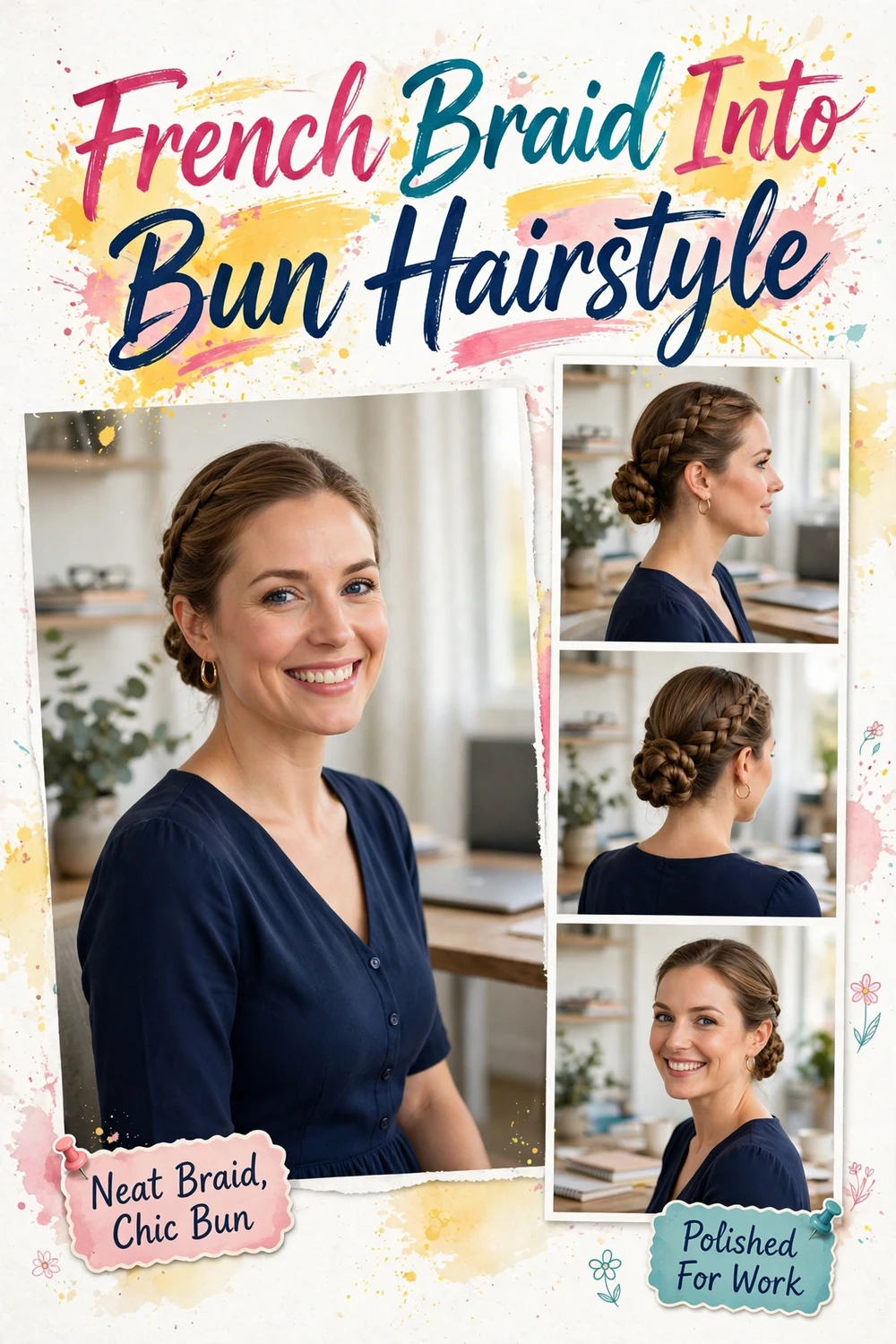
French Braid Into Bun Hairstyle
A French braid flowing into a bun keeps hair secure from crown to ends, making it useful on windy winter commutes. Begin the braid near the upper back of the head, add sections gradually, and stop just above the nape, then gather the remaining length into a compact bun positioned above the coat collar. The front can stay smooth or slightly softened around the temples without requiring loose pieces. Once it is secured, very little work is needed during the day, which is a real advantage when you are moving between cold streets and heated offices.
Medium to long hair works best because there is enough length for both the braid and the bun. Use a lightweight styling cream for grip and flyaway control, bobby pins to secure the bun, and a fabric-covered elastic at the braid base. Styling takes more effort than a simple ponytail, but the payoff is a style that does not budge. If your hair is very dense, use broader braid sections and a flatter bun, which distributes weight through the back instead of concentrating it in a small, tight anchor.
If wind roughens the braid surface, smooth only the visible flyaways rather than rebuilding the entire style. The bun should sit where a scarf cannot push against it continuously. For event or salon-assisted styling, specify braid width, comfortable tension, and bun height: a medium-width braid usually looks polished without creating a bulky ridge, while a flatter bun is easier to wear under a winter coat.
A Dutch braid, where the sections cross under instead of over, gives a raised, more visible braid for days when you want extra detail. Moving the braid slightly to one side creates an asymmetric version that looks elegant from the front. The style also crosses over beautifully to weddings and evening events: just loosen a few face-framing pieces and add a decorative pin. Because everything is anchored twice, once in the braid and once in the bun, it holds through wind, dancing, and long days.
Tip: Finish the braid before putting on your coat, then check the bun placement against the collar and raise the anchor slightly if the fabric touches it.
Center-Part Straight Layers Hairstyle
Long straight layers can look polished at work when the upper half stays controlled and most movement begins below the face. Use a center part, keep the roots relatively smooth, and let face-framing layers start around the jaw or collarbone. The main length can extend well past the shoulders with full ends, creating a vertical line that works especially well when winter clothing already adds bulk around the neck. It is a timeless, understated look that suits offices of almost any dress code.
Naturally straight hair may need only light morning smoothing, while wavy or curly hair requires more time if a straight finish is the goal. Apply heat protectant before using a flat iron, then use a lightweight serum through the lower lengths to control surface flyaways. A quick refresh can focus on the front and top layer, while completely restyling long hair after washing is a much larger task. If your ends are sparse, begin the layers lower and maintain a fuller perimeter, so you can keep the center-parted movement without removing additional weight from the bottom.
Coats and scarves can create bends underneath the hair, so choose whether to keep the length fully behind the shoulders or bring it forward once you arrive indoors. At the salon, specify where the shortest face-framing layer begins and how much perimeter weight you want to retain, since too many short layers prone to winter frizz can make the outline harder to manage without adding useful movement.
Curtain-style face framing, where the shortest layers part around the face like curtains, softens the center part without changing the overall length. A bouncy blowout gives the layers movement for special days, while a flat iron keeps them sleek for the office. Long layered hair benefits from a trim every eight to ten weeks to keep the ends full and healthy. A lightweight oil on the very ends prevents the dry, frayed look that winter air can cause.
Tip: Choose one clear hair placement during your commute rather than shifting long lengths repeatedly across a wool scarf.

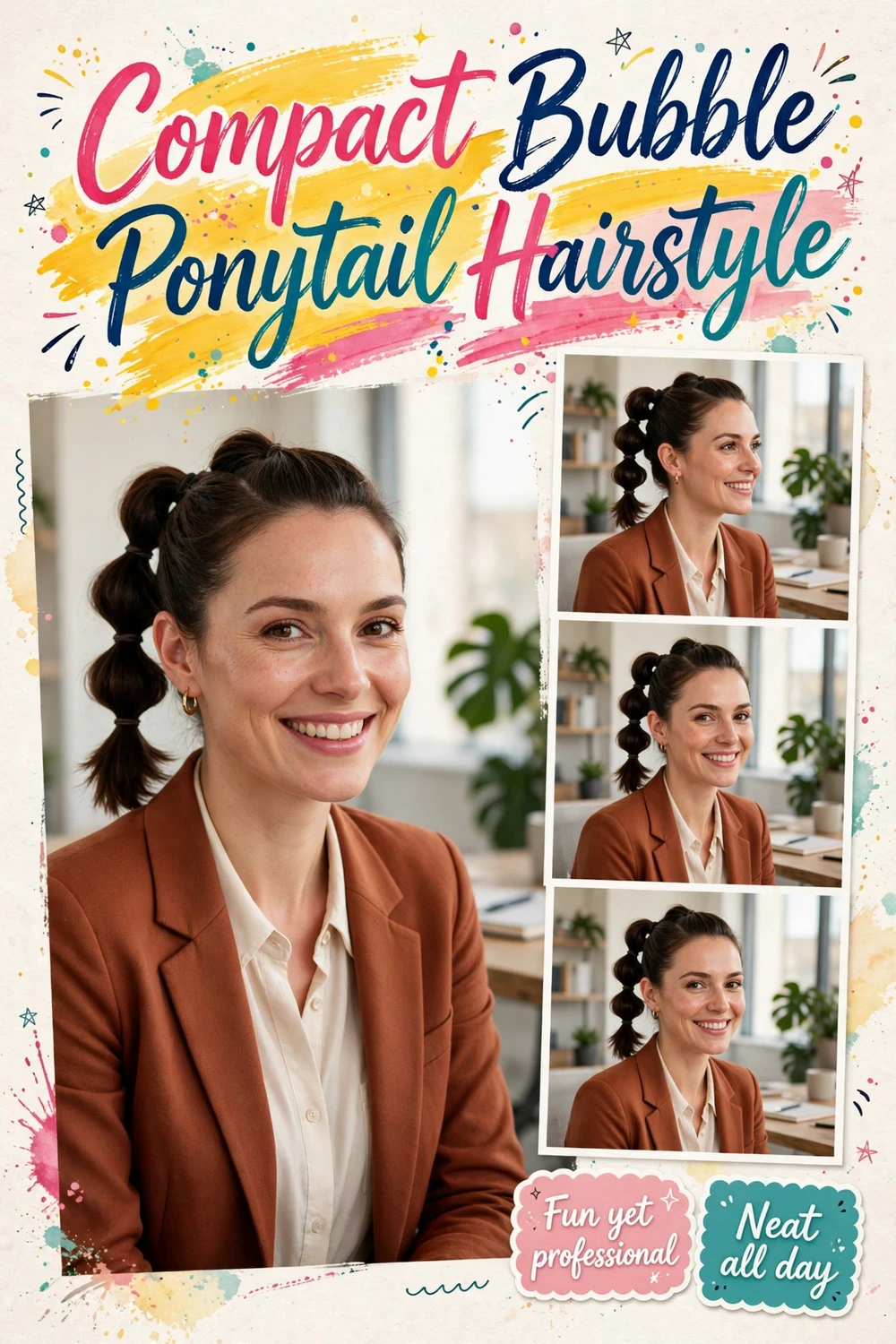
Compact Bubble Ponytail Hairstyle
A compact bubble ponytail keeps long hair contained while adding a little detail to an otherwise simple work style. Create a mid-height or low ponytail, then add a few evenly spaced elastics down the length and gently expand each section. Keep the bubbles restrained rather than oversized, and use a clean center or side part so the style remains office-friendly rather than overly decorative. It is playful without being childish, and it solves the winter problem of loose ends rubbing against scarves all day. For a low-effort style with visible personality, it deserves its place among Easy Work Hairstyles for Winter.
Long hair creates the clearest pattern, while medium lengths can use only two or three sections. Use a fabric-covered elastic for the main base, small elastics for the divisions, and lightweight styling cream to smooth the surface. On prepared hair the style can be assembled fairly quickly, while full washing and drying still requires separate time, especially for dense or textured hair. If your hair has lower density, keep the bubbles longer and expand them only slightly, since a restrained shape preserves fullness better than pulling each section very wide.
Winter practicality comes from keeping the ends contained and reducing the amount of loose hair rubbing against scarves. If one bubble loses shape, adjust that section instead of rebuilding the whole ponytail. For professional styling, specify the anchor height and bubble spacing: wider spacing creates fewer, larger sections, while closer spacing creates more texture and may feel busier with formal office clothing.
Placement changes the mood: a higher bubble ponytail feels playful and energetic, while a low one stays subtle enough for conservative offices. Elastics in your hair color make the divisions nearly invisible, so the bubbles themselves become the detail. A thin ribbon threaded between the bubbles dresses the style up for a holiday lunch. The style also works well for long video-call days, since it looks intentional on camera from every angle.
Tip: Place all the small elastics before expanding any sections, so the spacing looks even from top to bottom.
Tucked-Behind-Ears Bob Hairstyle
A bob tucked behind the ears creates a very clean winter work silhouette because the front stays clear of scarves, glasses, and coat lapels. Keep the length around the jaw or upper neck, with a substantial perimeter and minimal short layering around the temples. A center or slight side part works well, while the ends can remain straight, softly bent, or naturally textured. There is nothing to pin, nothing to re-tie, and nothing for a scarf to disturb, which makes this one of the lowest-maintenance Easy Work Hairstyles for Winter.
Straight and softly wavy hair show the compact outline most clearly, although curlier bobs can use the same tucked placement. Use a lightweight styling cream to smooth the temple area and a fine-tooth comb to guide short pieces neatly behind the ears. A morning refresh may be very short if the cut already falls well, while a full blow-dry or smoothing session takes longer when the natural texture differs from the intended finish. If your bob is naturally wavy, keep the temple area controlled while allowing movement through the lower ends, so the tucked shape still looks polished without requiring a completely straight finish.
Maintenance becomes noticeable when front layers grow too short or too awkwardly to stay tucked, and the perimeter also needs reshaping when it begins resting heavily on winter collars. At the salon, tell your stylist that you frequently wear the sides behind the ears and show where you want the front section to finish, since that small detail can make the everyday tuck much more reliable.
If you wear glasses, the tuck keeps the temples completely clear and stops the arms from sliding on loose hair. Earrings also get their moment with this style, since the ears stay visible all day. For an asymmetric twist, tuck only one side and let the other fall forward, which adds a little attitude without losing the clean silhouette. A tiny amount of styling cream on the tucked sections stops them from springing free, especially on dry, static-prone days.
Tip: Tuck the front sections while they are slightly damp, then let them settle in that direction, so the placement survives removing a hat or scarf.

More Amazing Ideas
Soft Side Braid Hairstyle
A soft side braid keeps long hair contained while moving it away from the back of a winter coat. Create a side part, bring the lengths over one shoulder, and form a medium-width braid beginning around the lower neck. Keep the crown lightly lifted and leave only a small number of face-framing sections free, so the braid looks controlled rather than heavily pulled apart, which makes it easier to wear in a professional setting. Worn forward, it avoids much of the friction that happens when loose hair stays trapped between your back and a wool coat.
Medium and long hair create the softest side braid, and a little natural texture helps the braid hold its shape. Use a lightweight styling cream to smooth the surface, a fabric-covered elastic at the end, and bobby pins only where a face-framing piece needs securing. On prepared hair the braid can be formed quickly, while full washing and drying takes longer, especially for dense hair. If your hair is fine, gently loosen the braid edges after securing it, which makes the braid look fuller without making it messy.
Because the braid sits forward over one shoulder, it stays clear of scarves and coat collars at the back, which is its main winter advantage. If the braid slips forward during the day, reposition it over the shoulder rather than tightening the base. At the salon, discuss how long you want the face-framing sections to be when the braid is worn to one side, so they frame the face softly without constantly falling into your eyes.
A fishtail version gives a more textured finish, while a classic three-strand braid looks the most polished for the office. A small ribbon or a slim barrette at the braid end adds a finished detail without changing the technique. The side braid also works well on second-day hair, since a little texture actually improves grip. Keep the braid over the shoulder you do not carry a bag on, so it is not repeatedly disturbed.
Tip: Start the braid a little lower than you think you need, so it falls naturally over the shoulder instead of pulling at the nape.

Textured Pixie Side Fringe Hairstyle
A textured pixie with a side fringe keeps the neck completely clear of winter layers and gives the whole head a sharp, modern shape. Keep a soft side-swept fringe, textured layers through the crown, and a tapered nape, which together create movement without needing to reposition hair under a scarf. The style stays in place from morning to evening with very little intervention, and it pairs naturally with statement earrings, bold coats, and structured scarves. For short-haired readers, this is the simplest answer among Easy Work Hairstyles for Winter.
Most hair textures can support a pixie with appropriate shaping, although very fine hair may benefit from a slightly more generous fringe and crown to preserve fullness. Apply a lightweight styling cream or pomade for texture and separation, use your fingertips rather than a brush for daily shaping, and keep the finish touchable instead of rigid. Styling on dry, prepared hair can be genuinely fast, while washing and drying is a separate task that remains quick compared with longer lengths. If your hair is very fine, preserve more length through the crown and fringe rather than thinning aggressively, which maintains visible volume without reducing the pixie’s easy shape.
Winter hats can flatten the crown, so plan for a quick fingertip refresh after removing one, and remember that the nape needs regular trimming to keep the tapered line neat. At the salon, clarify whether you want a classic tapered nape or a softer, feathered one, and identify exactly where the fringe should finish so the style still works with glasses or a hat brim.
A longer pixie with a side-swept fringe offers more styling options than a very short crop, while a classic pixie with a tapered nape is the easiest to maintain day to day. A touch of pomade on the crown pieces adds definition, and a quick blow-dry with your fingers gives lift without tools. The cut grows out into a soft, shaggy shape rather than looking instantly overgrown, which buys you extra time between appointments. Bold lip color and earrings complement the exposed face beautifully.
Tip: Keep the nape tapered and the crown textured, so a scarf can sit comfortably without disturbing the silhouette.

Low Twisted Updo Hairstyle
A low twisted updo gathers several soft twists into a low, compact shape that sits above a winter coat collar. Divide the hair into sections, twist each one gently, and pin the twists around a central low anchor, keeping the front smooth and the crown lightly lifted. The result looks elegant without looking formal, and because every section is pinned, it survives scarves, wind, and long office days far better than a loose style. It is a graceful final option among Easy Work Hairstyles for Winter, especially for days when you want an updo that is not a bun.
Medium and long hair are easiest to pin, and some natural texture can help the twists hold. Use a fabric-covered elastic for the central anchor, bobby pins to secure each twist, and flexible hairspray for surface control. Styling takes a little longer than a simple ponytail, but the payoff is a style that stays put. If your hair is very smooth, a little texturizing spray through the interior sections gives the pins something to grip.
Check the updo against your coat collar before leaving home. If the lower twists rest directly on the fabric, move the entire anchor slightly higher rather than pinning more tightly. For professional styling, explain the desired twist width and overall height: medium-width twists usually look polished without creating a bulky ridge, while a slightly higher anchor is easier to wear under a winter coat.
Rope twists, made by twisting two sections around each other, look more defined than flat twists and hold well on smooth hair. A few decorative pins, added after the style is secure, turn the same updo into an evening look without redoing it. Loosening one or two twists around the face softens the whole shape for a more relaxed office day.
Tip: Create a secure central anchor before pinning the decorative twists around it, so the visible sections stay soft instead of carrying the style’s full weight.

Final Styling Notes for Winter Workdays
The thread running through all seventeen styles is simple: winter hair works best when it is planned around real life. Check every style against your coat, your scarf, and your hat before you commit to it, and favor anchors that sit above the highest collar you own. Keep products light, because heavy products attract lint from wool and scarves and make second-day hair feel weighed down faster. Refresh only the visible sections, reset the anchor when needed, and let the rest of the style do its job.
A work hairstyle does not need to be elaborate to look polished. A clean part, a smooth surface, a secure anchor, and ends that are contained will carry almost any office outfit, from a blazer to a chunky knit. Try two or three styles from this list across a single week, note which ones survive your commute, and build a small rotation around the winners. That rotation, plus a two-minute desk refresh, is what keeps winter work hair looking intentional all day, every day.
Frequently Asked Questions
How can I reduce static in my hair during winter? Static usually comes from friction between dry hair and materials such as wool, hats, and scarves. Keep the hair lightly moisturized, use a small amount of leave-in conditioner or smoothing serum, and choose contained styles such as braids, buns, or ponytails on the driest days, so less hair is left loose to rub against winter clothing.
Which work hairstyles are easiest to wear with scarves? Styles that keep the nape clear are the easiest with scarves, including high buns, crown puffs, higher claw-clip twists, and ponytails positioned above the scarf edge. Low styles can still work, but check the anchor so the scarf does not constantly push the style upward.
What should I do after a winter hat flattens my hair? Focus on restoring the roots and the part rather than restyling the whole head. Finger-lift the crown, reset the side or center part, or rebuild a ponytail or bun if the anchor has slipped. A quick shake at the roots and a little dry shampoo usually restores most of the shape.
Can curly or coily hair stay polished at work in winter without heat? Yes, absolutely. Low puffs, crown puffs, pinned updos, braids, and defined loose sections all work beautifully with natural texture. The keys are moisture, comfortable tension, and friction control: keep the hair conditioned, avoid pulling the style too tight, and choose anchors that sit above scarves and coat collars.


